
What does reliable uptime mean? You’ve probably seen those percentages scattered all over hosting and SaaS websites – 99%, 99.9%, 99.99% – and glazed straight over them. Fair enough. At first glance, the difference looks almost too small to matter.
But here’s the thing: when you translate those percentages into actual hours and days of downtime, the picture changes completely. Let’s break it down.
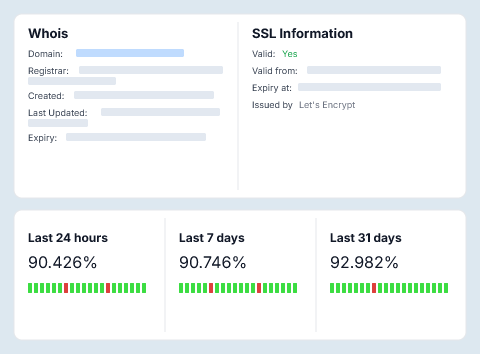
The Numbers Side by Side
Before diving in, here’s a quick look at what each uptime tier actually costs you in real time:
| Uptime | Daily Downtime | Monthly Downtime | Yearly Downtime | Suitable For |
| 99% | 14m 24s | 7h 18m | 3.65 days | Non-critical services |
| 99.9% | 1m 26s | 43m 50s | 8.77 hours | Standard business |
| 99.99% | 8.6s | 4m 23s | 52.6 minutes | High availability |
Notice how quickly days become hours? That’s the story right there.
Unpacking 99% Uptime
On paper, 99% sounds impressive. It’s almost perfect. But run those numbers and you’re looking at over 3 and a half days of downtime every year. That’s not a rounding error – that’s real time your service is unavailable.
And here’s the catch: downtime is rarely predictable. It doesn’t politely schedule itself for 3am on a Sunday. It tends to hit when it hurts most:
- 30 minutes right in the middle of peak operating hours
- The first hours of a product launch you’ve been building towards for months
- A bank holiday weekend when your team is down to a skeleton crew
- Intermittent dropouts that are frustratingly hard to pin down and fix
Three and a half days of downtime isn’t a minor inconvenience – it’s an operational nightmare waiting to happen.
Take a practical example: you’re running an ecommerce store and spending £200 on paid ads. Your site goes down for a few hours. You’re still paying for every click – but instead of landing on a product page, visitors hit error messages, timeouts, or a broken checkout. That ad budget? Largely wasted.
The jump from 99% to 99.9% might look small, but it’s the difference between days of downtime and hours. That matters.
99.9% – The Baseline
Adding that extra “9” cuts your annual downtime from days to just over 8 hours – roughly one working day across the entire year. Broken down, that’s about 1 minute and 26 seconds of daily downtime. Honestly? That sounds pretty manageable.
The real concern at this level isn’t total downtime – it’s when it happens and how visible it is. Outages tend to be shorter, yes, but also sneakier. Your homepage might still load fine while specific things silently fail behind the scenes: checkouts, login flows, API integrations.
This is where revenue leakage gets quiet and dangerous. Just one hour of unnoticed failure can lead to:
- Lost transactions that never got the chance to complete
- Distorted analytics that skew your performance data
- Broken integrations causing downstream problems you won’t notice until later
- Customer frustration that quietly damages your reputation
You’re not facing catastrophe at 99.9% – but you are still exposed to performance risk that can quietly chip away at your bottom line.
High Availability: 99.99% Uptime
This is where reliability becomes a competitive advantage. At 99.99%, you’re limited to just 52.6 minutes of total downtime per year. For businesses that depend on their digital infrastructure – think SaaS platforms, financial services, high-volume ecommerce – this tier is the goal.
Getting here requires eliminating single points of failure through:
- Redundant systems that take over if something fails
- Failover mechanisms that kick in automatically
- Load balancing to distribute traffic and avoid bottlenecks
When you have those building blocks in place, you stop experiencing dramatic, obvious failures. Instead, any issues tend to be brief performance dips rather than full outages.
The benefits at this level compound quickly:
- Minimised disruption and consistently high reliability
- Revenue protection – you’re almost never losing transactions to downtime
- A noticeably better user experience that builds trust over time
- Data integrity that you can actually rely on
- Scalability headroom when traffic spikes
When downtime shrinks to minutes per year, reliability stops being a baseline expectation and starts being something that sets you apart.
The Bottom Line
Uptime percentages look deceptively similar on a product page. But the gap between 99% and 99.99% is the difference between days of downtime and minutes. For any business where digital availability drives revenue, reputation, or customer trust, that gap isn’t just technical – it’s strategic.
The right tier depends on your business, your risk tolerance, and what downtime actually costs you. But now you can make that call with your eyes open.